Manaslu Circuit Trekking: The Complete Guide To Nepal's Last Great Wilderness Trek
By Nepal Trekking Trail On 16 Sep 2026
Quick Contact
By Nepal Trekking Trail On 16 Sep 2026
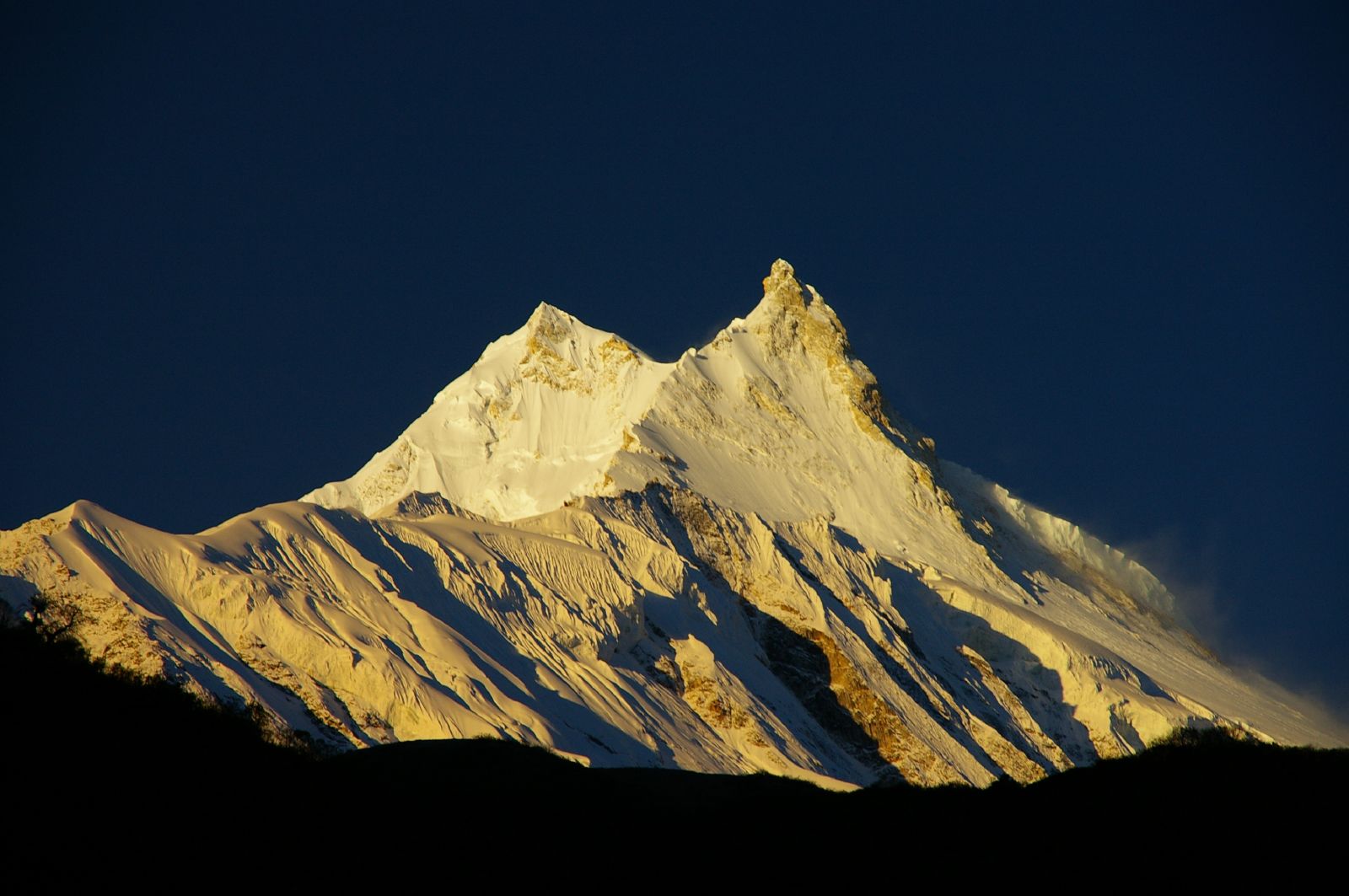
The Manaslu Circuit Trek circles the eighth-highest mountain on Earth through a valley that Nepal only opened to foreign trekkers in 1992. More than three decades later, it remains one of the few Himalayan routes where a trekking day can pass without meeting another foreign face, where monasteries still function as the center of village life rather than as photo stops, and where the mountain culture of the Nubri and Tsum valleys has not been reshaped by mass tourism the way parts of the Everest and Annapurna regions have.
That protection is not an accident. It exists because Manaslu is a restricted area, which means every trekker who walks here does so through a licensed agency, with a government-registered guide, and under a permit system designed specifically to control impact. This single fact changes everything about how you should plan the trip — from the itinerary you choose, to the price you pay, to the agency you trust with your safety at 5,106 meters.
This guide covers everything you need to know: the route itself, how to choose a genuinely reasonable trekking agency instead of a dangerously cheap one, why safety is non-negotiable in this terrain, how sustainable and community-based tourism actually works on this trail, and why the Manaslu Circuit matters — not just as a bucket-list trek, but as a model for how mountain tourism can be done responsibly. It closes with the ten questions trekkers ask most often about this route.
Manaslu (8,163m) sits in the Gorkha district of west-central Nepal, and the circuit around it is often described as a quieter alternative to the Annapurna Circuit or Everest Base Camp. That comparison undersells it. The Manaslu Circuit is not simply "Everest without the crowds" — it is a genuinely different kind of trek, and its importance goes beyond scenery.
It protects a living culture. The Nubri and Tsum valleys are home to communities of Tibetan Buddhist heritage whose customs, dialects, and monastic traditions have been shaped by centuries of relative isolation. Because trekker numbers are capped by the restricted-area permit system, the valley has avoided the rapid commercialization that can erode local culture when tourism arrives too fast and too unregulated.
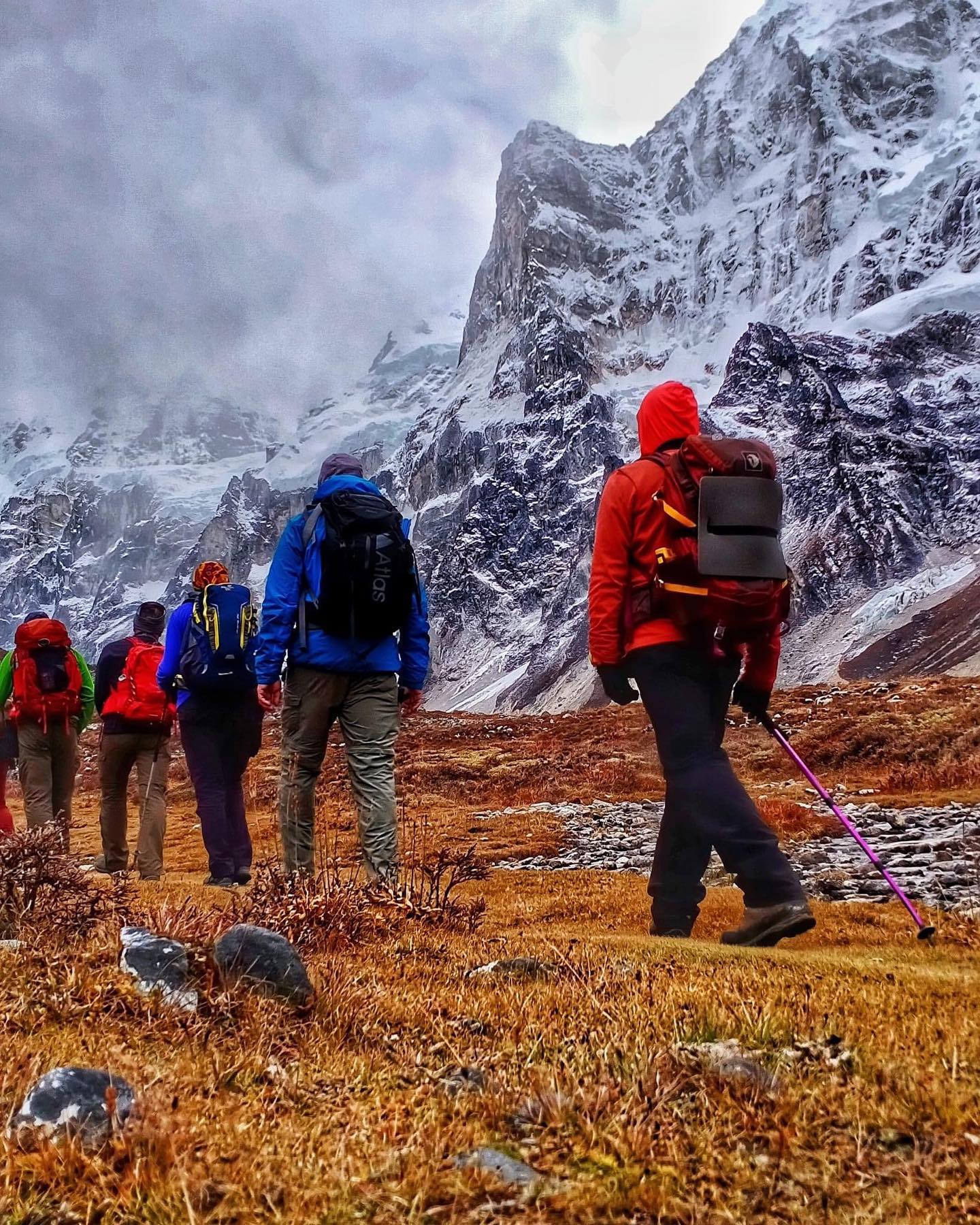
It protects a fragile ecosystem. The trail rises from subtropical river valleys near Soti Khola, through rhododendron and pine forest, into alpine pasture, and finally across the glaciated Larkya La pass at roughly 5,106 meters. Along the way it passes through the Manaslu Conservation Area, home to snow leopards, Himalayan tahr, musk deer, and — in the lower forests — even red pandas. Very few treks in the world compress this range of ecological zones into a single 14–18 day route.
It distributes tourism income more fairly. Because the restricted-area system requires every trekker to travel with a registered agency and licensed guide, and because teahouses along the route are locally owned, tourism revenue here tends to stay closer to the people who live in the valley, rather than flowing mainly to large operators based far away.
It matters as a demonstration of what "controlled tourism" can achieve.Nepal opened Manaslu to trekkers cautiously and has kept it that way. The permit system, the guide requirement, and the conservation area status together form a working example of tourism policy that prioritizes long-term sustainability over short-term visitor numbers. Anyone interested in the future of responsible travel in the Himalayas has reason to pay attention to how Manaslu is managed.
Most itineraries run 14 to 18 days round trip from Kathmandu, including drive days at both ends. The trek typically begins at Machha Khola or Soti Khola, a full day's drive from Kathmandu, and follows the Budhi Gandaki River upstream through a series of villages: Machha Khola, Jagat, Deng, Namrung, Lho, Sama Gaon, and Samdo, before crossing the Larkya La pass and descending into the Manang district near Dharapani, from which the route joins the Annapurna Circuit trail toward Besisahar.
A short, well-known side trip branches off toward Tsum Valley, a separate restricted valley with its own permit, known for the Mu Gompa and Rachen Gompa monasteries and an even lower level of visitor traffic than the main Manaslu trail. Many trekkers who have the extra week add this side trip precisely because it deepens the cultural experience without adding significant technical difficulty.
Sama Gaon, at around 3,530 meters, is the natural place to spend an acclimatization day, and many trekkers use it to hike up toward Manaslu Base Camp or Birendra Lake for close-up mountain views before continuing higher. Samdo, higher still, is often used as a second acclimatization stop before the push toward Dharamsala (also called Larke Phedi) and the pass crossing itself.
The crux of the trek is the Larkya La pass, a long summit day that typically starts before dawn to cross the pass while the winds are calmer and to reach the descent side before afternoon weather closes in. This is a full mountaineering-style pass day, not a casual walk — several hours of exposed high-altitude terrain in one push, with no teahouse directly on top.
Trail conditions vary sharply by season. Spring (March–May) and autumn (September–November) offer the most stable weather and are the most popular windows. Winter (December–February) is possible for experienced trekkers at lower altitude but the pass can be closed by snow. The monsoon months (June–August) bring landslide risk on the lower trail and limited visibility higher up, and most agencies advise against it for this particular route.
Because Manaslu is a restricted area, the permit system is not a formality — it is the mechanism that makes this trek different from an open trail like Annapurna Base Camp. As of the current regulations, trekkers need three separate permits:
If the Tsum Valley side trip is included, a fourth, separate Tsum Valley RAP applies, with its own seasonal weekly structure. A local Chumnubri Rural Municipality fee is also collected. None of these permits can be purchased independently by a solo traveler walking in off the street — they must be processed through a government-registered trekking agency, and a licensed guide is mandatory for the entire route. Solo trekking without a guide is not permitted in this region, regardless of experience level.
This is the first thing that separates the Manaslu Circuit from most other treks in Nepal, and it is also the first thing a cut-rate operator will try to cut corners on.
"Reasonable" is the right word here — not the cheapest, and not necessarily the most expensive, but an agency whose price reflects what the trek actually costs to run safely and legally. Here is what separates a reasonable agency from a risky one.
1. Verify registration and licensing. A legitimate Manaslu operator will be registered with the Nepal Tourism Board and typically a member of the Trekking Agencies' Association of Nepal (TAAN). Because Manaslu requires a licensed guide by law, ask directly whether the guide assigned to your trek holds a government trekking guide license — not just a porter or helper filling in as a guide, which is a common shortcut among budget operators.
2. Ask exactly what the price includes. A trustworthy quote should clearly separate: the three mandatory permits, guide and porter wages, accommodation and meals, transport to and from the trailhead, insurance for the staff, and emergency evacuation arrangements. If a quote is vague about any of these, that vagueness is often where corners get cut later.
3. Check how staff are insured and paid. Reputable agencies carry insurance for their guides and porters that covers high-altitude rescue, and they pay wages that meet or exceed the minimum standards set by TAAN and the Nepal government. This is not just an ethical detail — a poorly insured, underpaid guide has less institutional support behind them if something goes wrong at 5,000 meters, and that gap in support becomes your problem too.
4. Read reviews for specifics, not stars. A five-star average tells you little. Look for reviews that mention the actual guide by name, describe how the agency handled an unexpected problem (illness, weather delay, evacuation), and confirm that the itinerary matched what was promised. Patterns of complaints about last-minute itinerary changes, hidden fees, or under-qualified guides are the most useful signal you can find.
5. Ask about group size and guide-to-trekker ratio. On a technical pass crossing like the Larkya La, a guide managing a very large group has less capacity to respond if one trekker develops altitude symptoms. A reasonable agency will be transparent about this ratio and will not overload a single guide to cut costs.
6. Confirm the acclimatization schedule in writing. A responsible itinerary builds in at least two acclimatization days at appropriate altitudes (commonly around Sama Gaon and Samdo) before the pass. If an agency's itinerary compresses the trek to save days without adjusting for altitude gain, that is a direct safety compromise, not just an inconvenience.
7. Ask what happens in an emergency. A reasonable agency should be able to explain, specifically, how a helicopter evacuation is arranged, who pays first (this is what travel insurance is for), and what communication equipment the guide carries on the trail. Vague answers here are a warning sign.
Because Manaslu's permit costs, guide wages, and logistics are largely fixed by regulation, there is a real floor beneath which a trek cannot be run safely and legally. When you see a Manaslu package priced dramatically below the market range, the savings are coming from somewhere — and it is worth knowing exactly where.
Unlicensed or under-qualified guides. The single most dangerous shortcut in restricted-area trekking is sending an unlicensed local helper in place of a trained, government-certified guide. An unlicensed guide may lack formal wilderness first aid training, may not recognize the early symptoms of Acute Mountain Sickness (AMS), and may not know the correct protocol for descent or evacuation.
Skipped or falsified permits. Because permit fees form a significant share of the total cost, some low-cost operators attempt to under-report trek duration or trekker numbers to reduce the permit fee paid to authorities. This exposes trekkers to legal risk at checkpoints and, more importantly, signals an operator willing to cut corners elsewhere too.
Underpaid, uninsured porters and guides. Wage theft and lack of insurance for trekking staff is a well-documented problem in Nepal's budget trekking sector. Aside from the ethical concern, an uninsured porter carrying excess loads at altitude is a person the agency has less incentive and capacity to protect if injury occurs — and injuries among under-supported staff can directly disrupt your trek.
Compressed itineraries. Cutting two or three days from a standard 14–18 day itinerary is one of the easiest ways to lower a quoted price, and it is one of the most dangerous, because those "extra" days are usually the acclimatization days that prevent altitude sickness. A dangerously fast ascent profile is often the hidden cost behind an unusually cheap package.
Substandard emergency backup. Cheap operators sometimes have no real evacuation arrangement beyond "we will figure it out if something happens." On a route where the nearest road can be several days' walk away and the pass crossing has no rescue infrastructure on top, this is not a theoretical risk.
The rule of thumb: if a quoted price does not appear to cover the mandatory permits, a fair daily wage for a licensed guide and porter, food and lodging for the full trek duration, and some form of insurance and emergency contingency — ask exactly what has been left out. It is far cheaper to ask that question in Kathmandu than to discover the answer at 4,800 meters.
Manaslu is not a technical climb, but it is a genuine high-altitude trek, and altitude — not the terrain itself — is the primary safety concern on this route.
Altitude sickness is the real risk. The trek's high point, Larkya La, sits at roughly 5,106 meters, and several days beforehand are already spent above 3,500 meters. Acute Mountain Sickness can affect fit, experienced trekkers just as easily as first-timers, because susceptibility is largely about ascent rate, not fitness level. Warning signs include persistent headache, nausea, loss of appetite, dizziness, and disturbed sleep. The only reliable early response is to stop ascending, and in more serious cases, to descend immediately. This is precisely why a properly staged itinerary with built-in acclimatization days is a safety requirement, not an optional upgrade.
A licensed, experienced guide is your primary safety system. In a restricted area with limited cell signal, sparse medical facilities, and long distances between settlements, your guide's training in recognizing AMS symptoms, managing group pace, and coordinating an evacuation if needed is the single most important safety factor on the trip — more important than gear, and more important than personal fitness.
Travel insurance with high-altitude rescue coverage is mandatory in practice, even if not legally required for entry. Helicopter evacuation from the Manaslu region is expensive, and a policy that specifically covers trekking up to at least 6,000 meters, including helicopter rescue, is the only reliable financial protection if a medical evacuation becomes necessary.
Weather on the pass day deserves particular respect. The Larkya La crossing is long, exposed, and offers no shelter partway across. Agencies with experienced local guides will adjust the departure time and, in rare cases, delay the crossing by a day if weather conditions are unsafe — a decision that should never be overridden for the sake of keeping to a schedule.
Basic personal preparation still matters. This includes layered clothing suited to a wide temperature range (from subtropical valley heat to sub-zero high-camp nights), broken-in trekking boots, a basic first aid kit, and honest self-assessment of symptoms during the trek rather than pushing through discomfort out of pride or a fear of holding up the group.
Safety on Manaslu is ultimately a shared responsibility between a well-run agency, a properly licensed guide, an appropriately paced itinerary, and a trekker willing to listen to their body and their guide rather than their schedule.
The Manaslu region offers one of Nepal's clearest examples of how trekking tourism, done deliberately, can support a local economy without overwhelming it.
Locally owned teahouses keep income in the valley. Unlike large hotel developments seen in some more commercialized trekking areas, accommodation along the Manaslu Circuit is almost entirely small, family-run teahouses. Money paid for a room or a meal here goes largely to a local household rather than to an outside investor, which means tourism income circulates directly within the community that hosts it.
The guide-and-porter requirement creates stable local employment.Because every trekker must hire a licensed guide, and most also hire porters, the restricted-area system has effectively guaranteed a baseline of employment for local and Kathmandu-based trekking staff, many of whom come from families with generations of experience in these mountains. Choosing an agency that pays fair wages and treats its staff well is not a peripheral ethical choice — it is a direct investment in that local employment structure.
Conservation area fees fund local infrastructure and protection. Revenue from the Manaslu Conservation Area Permit and related fees is intended to support conservation work and community infrastructure in the region, connecting the cost you pay to enter the area with the upkeep of the trails, forests, and wildlife habitat you are there to see.
Cultural preservation is part of the sustainability picture. The relatively controlled visitor numbers in Nubri and Tsum have allowed monasteries, festivals, and everyday village life to continue largely on their own terms rather than being reshaped into performances for tourists. Trekkers who take time to learn basic etiquette — modest dress near monasteries, walking clockwise around mani walls and chortens as is customary, asking before photographing people or ceremonies — help keep that relationship respectful rather than extractive.
Eco-tourism practices reduce environmental strain. Because Manaslu passes through genuinely fragile alpine and glacial environments, simple practices matter disproportionately here: carrying out all non-biodegradable waste, using treated or filtered water rather than buying bottled water at every stop, respecting fixed campsite and toilet arrangements in teahouses, and avoiding unnecessary firewood use in a region where forest cover at altitude regenerates slowly.
Choosing a reasonable, properly licensed agency and paying a fair price is not separate from the sustainability conversation — it is the mechanism through which sustainability actually happens on the ground. An underpriced trek is very often an under-resourced one, and the savings tend to come out of exactly the wages, conservation fees, and safety margins that make the local economy and environment sustainable in the first place.
Autumn (September to November) is the most popular season, offering the clearest mountain views and the most stable weather, though it is also peak season for permit pricing and trail traffic (relatively speaking — "busy" on Manaslu still means far fewer trekkers than on Everest or Annapurna's main trails).
Spring (March to May) offers similarly stable weather along with blooming rhododendron forests in the lower valley, and slightly lower permit costs than autumn.
Winter (December to February) is possible for well-prepared and experienced trekkers but carries real risk of the Larkya La being closed by snow, and requires cold-weather gear well beyond what autumn or spring demands.
Monsoon (June to August) is generally discouraged for this specific route due to landslide risk on the lower trail sections and poor visibility at altitude, even though it is technically the lower-cost permit season.
Total costs for a standard 14–18 day Manaslu Circuit package generally fall in a broad range depending on season, group size, and comfort level, but the components are consistent: the three mandatory permits (roughly USD 150–230 combined depending on season and trip length), a licensed guide's daily wage, porter costs if used, teahouse accommodation and meals for the full trek, and transport to and from the trailhead. Solo trekkers typically pay a premium over group rates because permit and guide costs are spread across fewer people. When comparing quotes between agencies, ask for this breakdown explicitly rather than accepting a single bundled number — it is the fastest way to identify whether a "deal" is actually a shortcut.
The Manaslu Circuit Trek rewards trekkers who take it seriously — not just physically, but in how they plan it. This is a route where the restricted-area system, the permit structure, and the guide requirement all exist for real reasons: to protect a fragile environment, to preserve a distinct mountain culture, and to keep trekkers safe in genuinely remote high-altitude terrain. Choosing a properly licensed, transparent agency over the cheapest available offer is not an overcautious choice — it is the single decision that determines whether your trek supports the valley you are walking through or quietly undermines it, and whether your safety net on the Larkya La pass is real or theoretical. Done right, Manaslu offers one of the most rewarding, least crowded, and most culturally rich treks anywhere in the Himalayas.
Yes. Manaslu is a government-designated restricted area, and trekking here without a licensed guide arranged through a registered trekking agency is not legally permitted, regardless of your experience level.
It is considered a moderately difficult to challenging trek, mainly because of the Larkya La pass crossing at roughly 5,106 meters. Good general fitness, prior high-altitude experience (helpful but not mandatory), and a properly staged acclimatization schedule matter more than technical climbing skill.
Three permits are required: the Manaslu Restricted Area Permit (RAP), the Manaslu Conservation Area Permit (MCAP), and the Annapurna Conservation Area Permit (ACAP). A separate Tsum Valley permit is needed only if you add that side trip. All must be arranged through a registered agency.
Most itineraries run 14 to 18 days including arrival and departure days in Kathmandu, with the core trekking portion typically taking 12 to 15 days depending on acclimatization stops and whether Tsum Valley is included.
Autumn (September–November) and spring (March–May) offer the most stable weather and clearest views. Winter is possible for experienced, well-equipped trekkers but risks a snow-closed pass, and the monsoon months are generally avoided due to landslide risk.
Total costs vary with season, group size, and comfort level, but a realistic budget typically needs to account for permit fees, a licensed guide's wage, optional porter costs, and full-board teahouse accommodation for the trek duration. Prices dramatically below this realistic range usually indicate cut corners somewhere in guiding, permits, or staff wages.
Solo trekking is allowed as long as you are accompanied by a licensed guide arranged through a registered agency — unguided solo trekking is not permitted because Manaslu is a restricted area. Solo trekkers should expect to pay somewhat more per person than those in a group, since permit and guide costs are spread across fewer people.
The Larkya La pass, at approximately 5,106 meters, is the highest point on the standard route and the most demanding single day of the trek.
Yes. With several days spent above 3,500 meters and a pass crossing above 5,000 meters, Acute Mountain Sickness is a real risk regardless of fitness level. A well-paced itinerary with dedicated acclimatization days, an experienced guide, and appropriate travel insurance with high-altitude rescue coverage are essential safeguards.
Yes. Because the restricted-area system requires a licensed guide and channels most accommodation and services through small, locally owned teahouses, tourism income on this route tends to stay within the local economy. Choosing a reasonably priced, properly licensed agency that pays fair wages to guides and porters directly strengthens this sustainable, community-based model — while underpriced packages tend to undermine it.
Discover more articles that match your interests! Explore these similar blogs packed with insights, tips, and stories to keep you inspired.
Discover the world\'s most spectacular Himalayan trails with our Nepal Trekking Packages 2026/27. From the legendary Eve...
Ready to explore Nepal? Choose your trail, prepare your body, pack smart and get ready to walk into the Himalayas....
Everest Base Camp Trek, Annapurna Circuit Trek, Manaslu Circuit Trek, Mardi Himal Trek, Langtang Valley Trek, and Upper ...
Everest Base Camp: Nepal\\'s Most Famous Trekking Destination...